
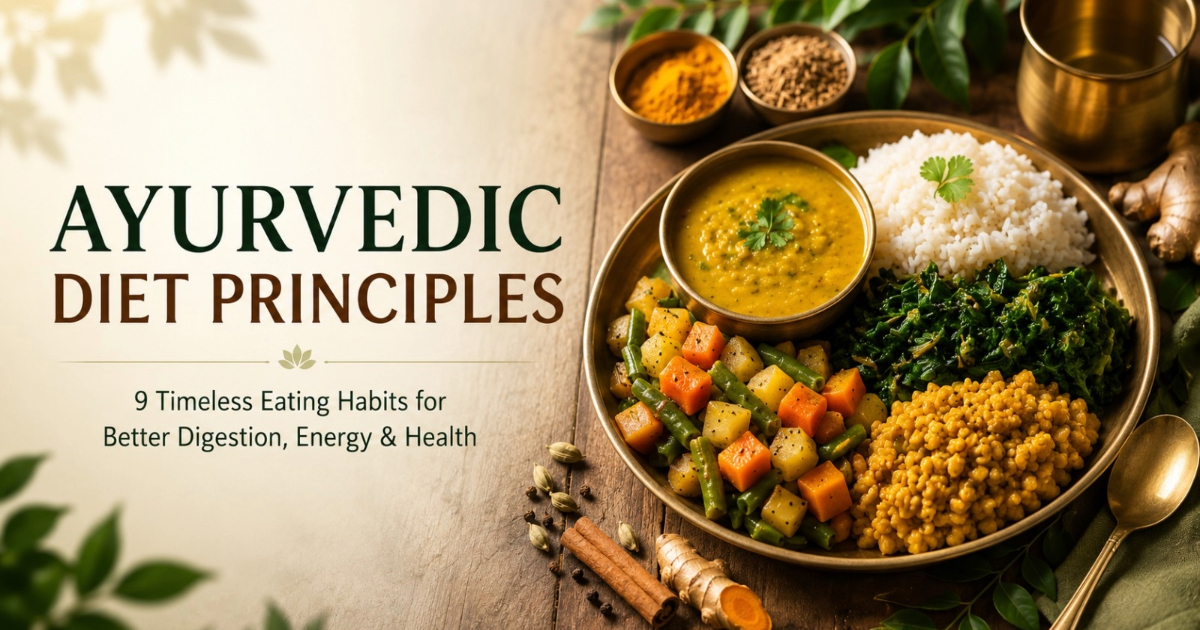
Ayurvedic Diet Principles(Ahara): 9 Timeless Eating Habits for Better Digestion, Energy and Well-Being
In Ayurveda, Ahara (wholesome nourishment) is one of the three pillars of health, known as Trayopasthambha.
Food is not merely a source of calories but a daily influence on digestion, vitality, and mental clarity. Understanding these principles allows us to nourish the body in harmony with nature.
Discover how Ayurveda transforms eating from counting calories to nourishing your body, mind, and digestive fire.
Have You Ever Wondered Why the Same Diet Doesn’t Work for Everyone?
Every day we make dozens of food choices.
Some are guided by hunger.
Others by habit.
Some by convenience.
And many by whatever happens to be available.
Yet despite eating regularly, many people still wonder why they experience bloating, fatigue, fluctuating energy, or discomfort after meals.
Ayurveda approaches food from a different perspective.
Instead of asking,
“What should everyone eat?”
it quietly asks,
“What does your body need today?”
That simple shift changes how we think about healthy eating.
Rather than following a one-size-fits-all plan, Ayurvedic diet principles recognize that every individual is unique. Your digestion, natural constitution (Dosha), age, daily routine, the season, and your current state of health all influence which foods are most suitable for you.
Ayurveda also looks beyond calories and nutrients. It teaches that how you eat, when you eat, and how well your body digests food are just as important as what you eat. When these factors work in harmony, food becomes more than nourishment—it becomes a foundation for healthy digestion, steady energy, mental clarity, and long-term well-being.
In this guide, you’ll discover 9 timeless Ayurvedic diet principles that are practical, beginner-friendly, and easy to incorporate into everyday life. Whether you’re new to Ayurveda or looking to develop healthier eating habits, these principles can help you build a more balanced relationship with food—one mindful meal at a time.
What Are Ayurvedic Diet Principles?
Ayurvedic diet principles are timeless eating habits that focus on how, when, and what we eat to support healthy digestion, balanced energy, and overall well-being.
Rather than following one universal diet, Ayurveda encourages eating according to your body’s needs, digestive strength, lifestyle, and the changing seasons.
The nine core principles include:
- Eat only when genuinely hungry.
- Eat mindfully without distractions.
- Eat the right quantity.
- Make lunch your main meal.
- Prefer freshly prepared foods.
- Eat according to the seasons.
- Keep food combinations simple.
- Eat with awareness and gratitude.
- Make food a daily act of self-care.
These principles are simple, practical, and suitable for anyone looking to build healthier eating habits naturally.
Here's What You'll Learn
- Understand what an Ayurvedic diet really means
- Learn the nine timeless principles of Ayurvedic eating
- Discover why digestion is more important than calorie counting
- Explore simple examples you can apply immediately
- Complete reflection exercises to build mindful eating habits
- Find practical routines, checklists, and answers to common questions
What Is an Ayurvedic Diet?
An Ayurvedic diet is not a strict meal plan or a list of forbidden foods. Instead, it is a personalized approach to eating that supports balance, healthy digestion, and overall well-being.
Rather than recommending the same foods for everyone, Ayurveda considers factors such as your digestive strength (Agni), body constitution (Dosha), age, daily routine, seasonal changes, and current state of health.
Instead of asking, “Which diet is the healthiest?”, Ayurveda asks a more meaningful question:
“Which foods are most suitable for me at this stage of life?”
The answer may change over time because your body’s needs change with age, lifestyle, health, and the seasons. This personalized approach is what makes Ayurveda unique and forms the foundation of the nine Ayurvedic diet principles you’ll discover in this guide.
Ayurveda's Beautiful Perspective on Food
A well-known Ayurvedic teaching reminds us of the importance of mindful nourishment.
हितभुक् मितभुक् ऋतभुक्
Hitabhuk Mitabhuk Ritabhuk
Meaning
Eat foods that are beneficial.
Eat in the right quantity.
Eat at the right time.
Though simple, these three principles form the foundation of healthy eating in Ayurveda and continue to be remarkably relevant in modern life.
Classical Insight
Ancient Ayurvedic texts such as the Charaka Samhita emphasize that proper diet is one of the three pillars (Trayopastambha) supporting health, alongside sleep and balanced use of energy.
Why Digestion Matters More Than Calories
Have you ever eaten a healthy meal but still felt tired, heavy, or uncomfortable afterward?
Ayurveda explains this through the concept of Agni, often described as the body’s digestive fire.
Agni doesn’t simply digest food—it helps transform food into energy and nourishment.
When digestion is strong, the body can better utilize the nutrients from what you eat.
When digestion becomes weak or imbalanced, even nutritious foods may not be processed efficiently.
If you’re new to this concept, you may enjoy reading our guide on Agni in Ayurveda, where we explore why digestion is considered the foundation of health.
Pause & Reflect
Think about your last three meals.
- Did you eat because you were hungry?
- Or simply because it was time to eat?
- Did you feel light and energized afterward?
- Or sleepy and sluggish?
Your answers offer valuable clues about your digestive health.
Ayurveda encourages us to observe these patterns before making changes.
The 9 Ayurvedic Diet Principles
These aren’t strict rules.
Think of them as practical habits that help you build a healthier relationship with food—one mindful meal at a time.
Principle 1 – Eat Only When You Feel Genuine Hunger
One of Ayurveda’s most fundamental dietary principles is to eat when your body signals that it is ready for nourishment—not simply because the clock says it’s time to eat.
True hunger indicates that your previous meal has been digested and your digestive fire (Agni) is prepared to process the next one. Eating before genuine hunger appears may place unnecessary strain on digestion and leave you feeling heavy or uncomfortable after meals.
Everyday Example
Think of your stomach like a cooking pot. Adding fresh ingredients before the previous meal has finished “cooking” can make the process less efficient. Giving your body enough time between meals allows digestion to work more effectively.
Practical Tip
Before reaching for a snack, pause for a moment and ask yourself:
“Am I physically hungry, or am I eating because I’m bored, stressed, or simply following a habit?”
Taking this brief pause can help you become more aware of your body’s natural hunger signals.
Quick Ayurveda Check
Which of these sounds familiar?
☐ I snack while working.
☐ I eat because others are eating.
☐ I often eat even when I’m not hungry.
☐ I rarely notice genuine hunger.
If you checked two or more, try waiting for your next natural hunger signal before eating. Observe how your body feels—you may begin to recognize the difference between true hunger and habitual eating.
Principle 2 – Eat in a Calm and Relaxed State
How often have you finished a meal only to realize you barely noticed its taste?
In today’s busy world, it’s easy to eat while checking emails, scrolling through your phone, watching television, or rushing from one task to another. Ayurveda encourages a different approach—giving your meal your full attention.
The digestive process begins even before the first bite. The sight, aroma, and anticipation of food help prepare the body for digestion. Eating in a calm, relaxed environment allows you to savour your meal, recognize when you’re comfortably satisfied, and develop a more mindful relationship with food.
Try This Today
Before your next meal:
Put your phone aside.
Sit comfortably.
Take one slow, deep breath.
Notice the colours, aroma, and texture of your food.
Begin eating slowly, without distractions.
This simple one-minute practice can make your meals more enjoyable while helping you become more aware of your body’s natural signals.
Principle 3 – Eat the Right Quantity
Ayurveda encourages us to pay attention to how our body feels, rather than relying solely on calorie counts or finishing everything on the plate.
The aim is to eat enough to nourish the body without leaving yourself feeling overly full or uncomfortable. With practice, your body’s natural signals become one of the best guides for deciding when a meal is complete.
How Does Your Body Feel After Eating?
A meal is often the right quantity when you notice:
✔ Comfortable satisfaction
✔ Steady energy
✔ A feeling of lightness
✔ No heaviness or bloating
If you’ve eaten more than your body needs, you may experience:
Sleepiness soon after eating
A feeling of heaviness or tightness
Reduced appetite at your next meal
Low energy during the afternoon
A Simple Habit to Try
Halfway through your next meal, pause for a few seconds and ask yourself:
“Am I still eating because I’m hungry, or simply because there’s food left on my plate?”
This small pause helps you reconnect with your body’s natural fullness cues and makes it easier to stop eating before discomfort begins.
Principle 4 – Make Lunch Your Main Meal
Just as nature follows a daily rhythm, Ayurveda teaches that your digestion does too.
Around midday, Agni (the digestive fire) is traditionally considered to be at its strongest. This makes lunchtime the ideal time to enjoy your most nourishing and substantial meal, when your body is best prepared to digest and utilize food.
As the day winds down, digestion is believed to become gentler. A lighter evening meal can therefore feel more comfortable and may support restful sleep.
A Simple Shift to Try
Instead of making dinner your largest meal, try reversing the balance:
Enjoy a wholesome, satisfying lunch.
Keep dinner lighter, but still nourishing.
Observe how you feel over the following week—especially your afternoon energy, evening comfort, and how refreshed you feel the next morning.
Rather than changing what you eat, this principle simply encourages changing when you eat your largest meal, working in harmony with your body’s natural rhythm.
Principle 5 – Choose Freshly Prepared, Warm Foods Whenever Possible
Ayurveda encourages eating foods that are as fresh and close to their natural state as possible. Freshly prepared meals are traditionally valued because they are considered more nourishing and easier to digest than heavily processed foods or meals that have been repeatedly reheated.
This doesn’t mean every meal needs to be cooked from scratch or that leftovers should never be enjoyed. Ayurveda recognizes that healthy eating should be practical as well as sustainable.
Think Progress, Not Perfection
Whenever possible, choose simple meals prepared with fresh ingredients, such as:
Whole grains like rice or millet
Seasonal vegetables
Lentils or legumes
Fresh soups or lightly cooked dishes
Even replacing one highly processed meal each day with a freshly prepared one can be a meaningful step towards healthier eating habits.
A Gentle Reminder
The goal isn’t to cook perfectly—it’s to make fresh, wholesome food a little more often than yesterday. Small, consistent choices are far more sustainable than striving for perfection.
Principle 6 – Eat Foods That Suit the Season
Nature doesn’t remain the same throughout the year—and Ayurveda suggests our meals shouldn’t either.
Think about summer.
Naturally we crave juicy fruits, cooling drinks and lighter meals.
During winter we often enjoy soups, warming spices and hearty foods.
Ayurveda simply encourages us to work with these natural rhythms rather than against them.
Seasonal Inspiration
| Season | Enjoy More Of |
|---|---|
| Summer | Water-rich fruits, cucumber, coconut water, lighter meals |
| Monsoon | Freshly prepared warm meals, digestive spices, light soups |
| Winter | Nourishing grains, soups, healthy fats, warming spices |
Seasonal eating doesn’t require a complete change in your diet. Often, simply choosing fruits and vegetables that are naturally available during the season is a practical place to begin.
Explore Further
Curious about how Ayurveda adapts daily routines throughout the year? Explore our guide to Ritucharya (Seasonal Living in Ayurveda) to learn how seasonal changes influence food, lifestyle, and well-being.
Principle 7 – Avoid Incompatible Food Combinations
Modern nutrition often encourages us to add more—more ingredients, more supplements, more “superfoods.” Ayurveda offers a refreshing alternative: sometimes, less is more.
One of its guiding concepts is Viruddha Ahara, or incompatible food combinations. Rather than suggesting that certain foods are inherently “good” or “bad,” Ayurveda encourages us to observe how different combinations affect our digestion and overall comfort.
For most people, the easiest place to begin is not by memorizing long lists, but by preparing meals with a few wholesome, complementary ingredients.
Food for Thought
Ask yourself after your next meal:
Did I feel light, comfortable, and energized—or heavy and sluggish?
Your body’s response is often a better guide than following complicated food rules.
Ayurveda’s Gentle Reminder
Healthy eating isn’t about creating the most elaborate plate. A simple, balanced meal that leaves you feeling nourished and comfortable is often more valuable than one packed with countless ingredients.
As with many Ayurvedic principles, awareness matters more than perfection.
Principle 8 – Eat with Awareness and Gratitude
Food nourishes more than the body—it also offers an opportunity to pause, reconnect, and appreciate the care that brings each meal to your table.
In Ayurveda, eating is viewed as a mindful act rather than a routine task. A brief moment of awareness before eating can help shift your attention from the busyness of the day to the nourishment in front of you.
A Five-Second Ritual
Before your first bite:
Pause.
Take one slow breath.
Notice your meal.
Express a quiet moment of gratitude—for the food, the people who prepared it, or nature’s abundance.
There is no right or wrong way to do this. The intention is simply to begin your meal with awareness rather than on autopilot.
A Thought to Take with You
The quality of a meal is shaped not only by what is on your plate, but also by the attention you bring to it. Sometimes, the smallest pause can transform an ordinary meal into an act of self-care.
Principle 9 – Let Food Become Your Daily Self-Care Practice
The word diet often brings to mind rules, restrictions, and constant self-control.
Ayurveda offers a gentler perspective.
Rather than treating food as something to measure or fear, it encourages us to see every meal as an opportunity to care for ourselves. Each thoughtful choice—whether it’s eating when you’re hungry, preparing a nourishing meal, or simply slowing down for a few moments—becomes part of a sustainable way of living.
The lasting benefits of Ayurveda rarely come from dramatic changes. They grow from small, mindful habits that naturally become part of everyday life.
One Final Reflection
At your next meal, ask yourself:
“Will this meal simply fill me, or will it truly nourish me?”
Sometimes, that single question is enough to guide healthier choices.
In Ayurveda, food is more than nourishment—it is one of the simplest ways to support your well-being, one meal at a time.
Everyday Ayurveda at a Glance
| Ayurvedic Principle | Everyday Habit |
|---|---|
| Eat when genuinely hungry | Avoid unnecessary snacking |
| Eat calmly | Minimize distractions during meals |
| Eat the right quantity | Stop when comfortably satisfied |
| Make lunch your main meal | Plan your most nourishing meal around midday |
| Choose fresh foods | Cook with fresh ingredients whenever possible |
| Eat with the seasons | Include seasonal produce regularly |
| Keep meals simple | Avoid overly complicated combinations |
| Eat with awareness and gratitude | Pause before your first bite |
Common Ayurvedic Eating Mistakes (And Simple Ways to Improve Them)
Even nutritious foods may not deliver their full benefit if eating habits don’t support healthy digestion.
Here are a few common patterns many of us fall into—and how Ayurveda encourages us to approach them differently.
| Common Habit | A More Mindful Ayurvedic Approach |
|---|---|
| Eating while scrolling on your phone | Give your meal your full attention. |
| Skipping meals and then overeating | Eat at regular times and respond to genuine hunger. |
| Eating too quickly | Slow down and chew comfortably. |
| Having a heavy dinner late at night | Enjoy a satisfying lunch and a lighter evening meal. |
| Eating out of stress or boredom | Pause for a moment and ask what your body truly needs. |
The goal isn’t to change everything overnight.
Even improving one habit can make your eating routine feel more balanced.
A Simple One-Day Ayurvedic Eating Routine
If you’re wondering how these principles come together in daily life, here’s an example.
Remember, this is only a guide—not a rigid meal plan.
Morning
- Wake up and hydrate.
- Allow your body to awaken naturally.
- Eat breakfast when genuine hunger appears.
Midday
- Make lunch your most nourishing meal.
- Include whole grains, vegetables, protein sources such as lentils or legumes, and healthy fats.
- Eat without distractions whenever possible.
Afternoon
- If you’re hungry, choose a light, wholesome snack rather than processed foods.
Evening
- Enjoy a lighter dinner.
- Finish eating well before bedtime if possible.
- Give your body time to digest before sleeping.
Simple routines are often easier to maintain than complicated diets.
Pause & Reflect
Imagine following just three Ayurvedic habits for the next seven days.
Which would you choose?
☐ Eating only when hungry.
☐ Making lunch your largest meal.
☐ Cooking one fresh meal each day.
☐ Eating without your phone.
☐ Slowing down during meals.
Small commitments often lead to meaningful changes.
Your Ayurvedic Diet Principles Checklist
Use this as a gentle reminder rather than a strict set of rules.
 Eat when genuinely hungry.
Eat in a calm environment.
Avoid overeating.
Make lunch your main meal whenever possible.
Choose freshly prepared foods more often.
Eat seasonal produce.
Keep meals simple.
Practice mindful eating.
Notice how different foods make you feel.
You don’t have to do everything at once.
Progress is built one meal at a time.
Diet is one step towards Swastha(true health).
Frequently Asked Questions
What is an Ayurvedic diet?
An Ayurvedic diet is a personalized approach to eating that considers digestion, body constitution, daily routine, seasonal changes, and overall well-being rather than following one universal eating plan.
What are the basic principles of an Ayurvedic diet?
Some of the core principles include eating when hungry, choosing fresh foods, eating mindfully, avoiding overeating, eating according to the season, and supporting healthy digestion.
Does Ayurveda recommend vegetarian food?
Not necessarily.
Ayurveda emphasizes choosing foods that are appropriate for an individual’s constitution, health, digestion, and lifestyle rather than prescribing one diet for everyone.
Why is digestion so important in Ayurveda?
Ayurveda considers healthy digestion (Agni) the foundation of overall well-being.
Strong digestion helps the body effectively process food and utilize nutrients.
Can beginners follow Ayurvedic diet principles?
Absolutely.
Most Ayurvedic eating habits are simple lifestyle practices rather than strict dietary rules.
Even adopting one or two principles consistently can make healthy eating feel more natural.
Continue Your Ayurveda Journey
Healthy eating is just one part of Ayurveda’s holistic approach to well-being.
To deepen your understanding, you may also enjoy exploring:
→ What Is Agni? Understanding Your Digestive Fire
→ Ama in Ayurveda: Understanding Toxins and Digestion
→ Ojas: The Essence of Vitality and Immunity
→ Ritucharya: Seasonal Living According to Ayurveda
Together, these topics help build a more complete understanding of how food, lifestyle, and daily habits work in harmony.
Enjoyed This Guide?
If you found this article helpful, continue exploring Ayurveda with us.
At Ayuryogaheal, our goal is to make timeless Ayurvedic wisdom simple, practical, and relevant for modern living.
Whether you’re learning about digestion, seasonal routines, yoga, or mindful living, every article is designed to help you take one meaningful step toward better health.
Which Ayurvedic diet principle are you going to try first?
Ready to Personalize Your Ayurvedic Diet?
Learning Ayurvedic principles is the first step.
Applying them to your unique constitution, digestion, lifestyle, and health goals is where meaningful change begins.
Ayurveda recognizes that no single eating plan works for everyone. Your constitution (Prakriti), digestive strength (Agni), daily routine, age, and current state of health all influence the foods that best support your well-being.
If you’re looking for personalized Ayurvedic dietary guidance, we’re here to help.
Our Ayurvedic Consultation Can Help You
Understand your unique constitution (Dosha)
Receive personalized dietary recommendations
Support healthy digestion and gut health
Improve energy and overall well-being
Build sustainable eating habits that fit your lifestyle
Every wellness journey is unique. Personalized guidance can help you make informed choices that are appropriate for your individual circumstances.
.