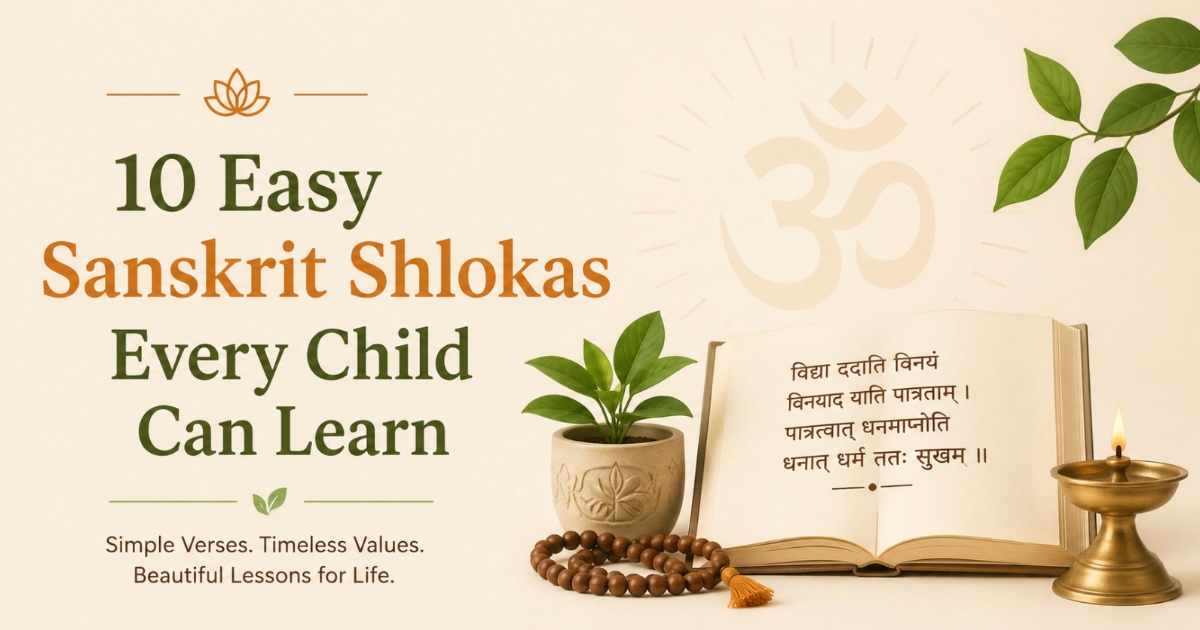
10 Easy Sanskrit Shlokas Every Child Can Learn
Many parents want their children to grow with confidence, kindness, focus, and respect—but finding meaningful daily habits isn’t always easy. Sanskrit shlokas offer a simple tradition that takes just a few minutes each day while nurturing values that stay for life.
These short verses are easy for children to memorize and often contain powerful lessons about respect, kindness, learning, self-confidence, and mindfulness. Beyond their spiritual significance, Sanskrit shlokas can also support better pronunciation, concentration, and memory skills.
Whether your child is just beginning their journey with Sanskrit or you want to introduce meaningful daily prayers at home, these beginner-friendly shlokas are a wonderful place to start.
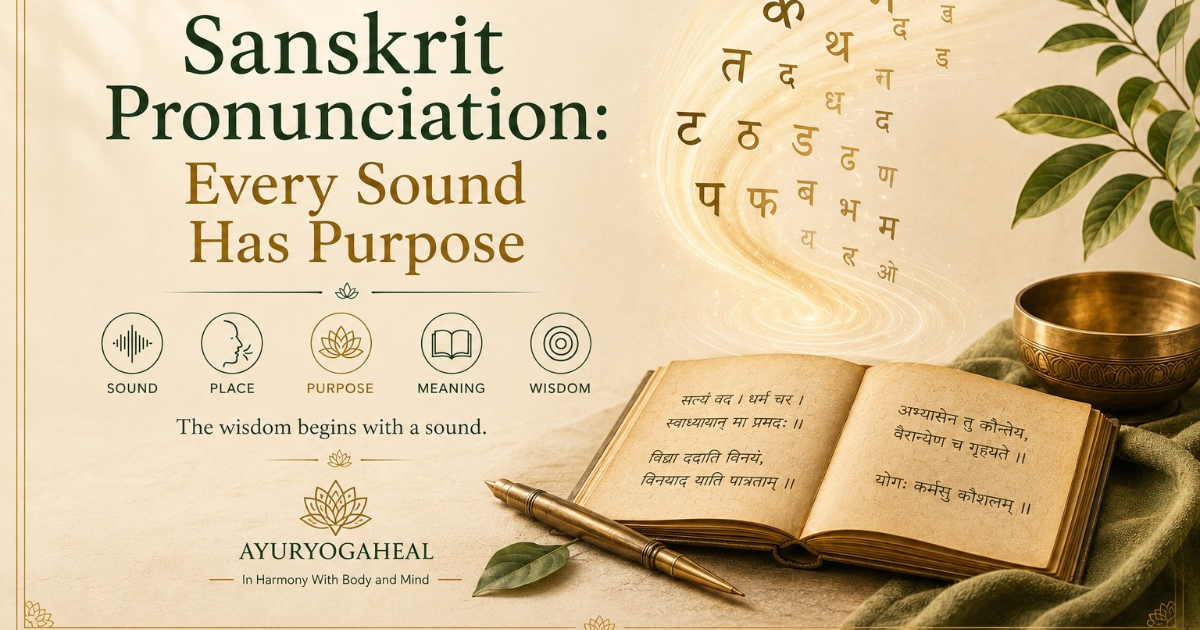
For children beginning their Sanskrit journey, learning to notice and distinguish sounds can make pronunciation more meaningful. Explore how Sanskrit sounds are formed and why each sound matters.
In this guide, we explore 10 easy Sanskrit shlokas every child can learn, along with their simple meanings and life lessons.
1. Karagre Vasate Lakshmi
कराग्रे वसते लक्ष्मीः
करमध्ये सरस्वती ।
करमूले तु गोविन्दः
प्रभाते करदर्शनम् ॥
Transliteration
Karāgre Vasate Lakṣmīḥ
Karamadhye Sarasvatī
Karamūle Tu Govindaḥ
Prabhāte Karadarśanam
Meaning
At the tips of our fingers resides Lakshmi (prosperity), in the middle resides Saraswati (knowledge), and at the base resides Govinda (divine support). Therefore, we look at our hands upon waking.
Life Lesson for Children
This shloka teaches self-confidence and gratitude at the beginning of each day.
In Ayurveda, small daily routines are believed to shape lifelong habits.
Pairing a short Sanskrit shloka with a consistent morning routine can help children begin their day with greater calm and focus.
Learn more about creating a balanced daily morning routine inspired by Ayurvedic Dinacharya.
2. Guru Brahma Guru Vishnu
गुरुर्ब्रह्मा गुरुर्विष्णुः
गुरुर्देवो महेश्वरः ।
गुरुः साक्षात् परब्रह्म
तस्मै श्रीगुरवे नमः ॥
Transliteration
Gurur Brahmā Gurur Viṣṇuḥ
Gurur Devo Maheśvaraḥ
Guruḥ Sākṣāt Parabrahma
Tasmai Śrī Gurave Namaḥ
Meaning
The teacher is like Brahma, Vishnu, and Maheshwara. The Guru guides us toward wisdom and knowledge.
Life Lesson for Children
Respect teachers and appreciate those who help us learn.
3. Saraswati Namastubhyam
सरस्वति नमस्तुभ्यं
वरदे कामरूपिणि ।
विद्यारम्भं करिष्यामि
सिद्धिर्भवतु मे सदा ॥
Transliteration
Sarasvati Namastubhyaṁ
Varade Kāmarūpiṇi
Vidyārambhaṁ Kariṣyāmi
Siddhir Bhavatu Me Sadā
Meaning
O Goddess Saraswati, I bow to you. As I begin my studies, may I always achieve success.
Life Lesson for Children
Encourages focus and a positive attitude toward learning.
Benefits of Learning Sanskrit Shlokas for Children
Learning Sanskrit shlokas may help children:
- Improve memory and concentration
- Develop clear pronunciation
- Build confidence while reciting
- Learn values such as gratitude and respect
- Connect with India’s rich cultural heritage
- Establish a calm morning or bedtime routine
Even a few minutes of daily recitation can become a valuable lifelong practice.
From Shloka Practice to a Healthy Daily Routine
A few minutes of Sanskrit practice can become more than a learning activity—it can become a gentle part of a child’s daily rhythm.
In Ayurveda, Dinacharya refers to a balanced daily routine that supports healthy habits and overall well-being. When children practise a shloka at a consistent time each morning, it can become a simple ritual that encourages focus, calmness, and consistency.
Curious about how Ayurveda approaches daily routines?
4. Vakratunda Mahakaya
वक्रतुण्ड महाकाय
सूर्यकोटि समप्रभ ।
निर्विघ्नं कुरु मे देव
सर्वकार्येषु सर्वदा ॥
Transliteration
Vakratuṇḍa Mahākāya
Sūryakoṭi Samaprabha
Nirvighnaṁ Kuru Me Deva
Sarvakāryeṣu Sarvadā
Meaning
O Lord Ganesha, remover of obstacles, please help me complete all my tasks successfully.
Life Lesson for Children
Begin every important activity with positivity and confidence.
5. Twameva Mata Cha Pita Twameva
त्वमेव माता च पिता त्वमेव
त्वमेव बन्धुश्च सखा त्वमेव ।
त्वमेव विद्या द्रविणं त्वमेव
त्वमेव सर्वं मम देव देव ॥
Transliteration
Tvameva Mātā Ca Pitā Tvameva
Tvameva Bandhuśca Sakhā Tvameva
Tvameva Vidyā Draviṇaṁ Tvameva
Tvameva Sarvaṁ Mama Deva Deva
Meaning
You are my mother, father, friend, knowledge, and everything.
Life Lesson for Children
Cultivates gratitude, humility, and trust.
6. Asato Ma Sadgamaya
असतो मा सद्गमय ।
तमसो मा ज्योतिर्गमय ।
मृत्योर्माऽमृतं गमय ॥
Transliteration
Asato Mā Sadgamaya
Tamaso Mā Jyotirgamaya
Mṛtyor Mā Amṛtaṁ Gamaya
Meaning
Lead me from untruth to truth, from darkness to light, and from fear to wisdom.
Life Lesson for Children
Encourages honesty and seeking knowledge.
7. Shubham Karoti Kalyanam
शुभं करोति कल्याणं
आरोग्यं धनसंपदा ।
शत्रुबुद्धिविनाशाय
दीपज्योतिर्नमोऽस्तुते ॥
Transliteration
Śubhaṁ Karoti Kalyāṇaṁ
Ārogyaṁ Dhanasampadā
Śatrubuddhi Vināśāya
Dīpajyotir Namo’stute
Meaning
Salutations to the light that brings well-being, health, prosperity, and wisdom.
Life Lesson for Children
Develop appreciation for light, learning, and positivity.
8. Om Sahana Vavatu
ॐ सह नाववतु ।
सह नौ भुनक्तु ।
सह वीर्यं करवावहै ।
तेजस्विनावधीतमस्तु ।
मा विद्विषावहै ॥
Transliteration
Om Saha Nāvavatu
Saha Nau Bhunaktu
Saha Vīryaṁ Karavāvahai
Tejasvināvadhītamastu
Mā Vidviṣāvahai
Meaning
May we learn together, grow together, and never have ill feelings toward one another.
Life Lesson for Children
Promotes cooperation, friendship, and teamwork.
9. Samudra Vasane Devi
समुद्रवसने देवि
पर्वतस्तनमण्डले ।
विष्णुपत्नि नमस्तुभ्यं
पादस्पर्शं क्षमस्व मे ॥
Transliteration
Samudra Vasane Devi
Parvata Stana Maṇḍale
Viṣṇupatni Namastubhyaṁ
Pādasparśaṁ Kṣamasva Me
Meaning
O Mother Earth, clothed by oceans and adorned by mountains, please forgive me for stepping on you.
Life Lesson for Children
Teaches environmental awareness and respect for nature.
10. Om Bhur Bhuvah Svah (Gayatri Mantra)
ॐ भूर्भुवः स्वः ।
तत्सवितुर्वरेण्यं ।
भर्गो देवस्य धीमहि ।
धियो यो नः प्रचोदयात् ॥
Transliteration
Om Bhūr Bhuvaḥ Svaḥ
Tat Savitur Vareṇyaṁ
Bhargo Devasya Dhīmahi
Dhiyo Yo Naḥ Pracodayāt
Meaning
We meditate upon the divine light that inspires and guides our intellect.
Life Lesson for Children
Encourages clarity of thought and inner growth.
Free Printable Sanskrit Shloka Companion
Enjoying these shlokas?
We’ve created a beautifully designed printable companion to help children practise at home.
Included in the free download
✓ All 10 shlokas
✓ Sanskrit text
✓ Transliteration
✓ Simple meanings
Perfect for parents, teachers, and children beginning their Sanskrit journey
Is Your Child Memorising... or Truly Learning?
Many children can memorise a shloka within a few days.
But Sanskrit offers much more than memorisation.
| Memorising | Understanding |
|---|---|
| Repeats words | Knows the meaning |
| Learns sounds | Learns pronunciation |
| Recites occasionally | Builds a daily habit |
| Remembers briefly | Develops lifelong appreciation |
| Reads from memory | Understands the wisdom behind each verse |
At Ayuryogaheal, our aim is not simply to help children recite Sanskrit—we help them understand, enjoy, and grow with it.
10 Shlokas and Their Core Values
| Shloka | Value Taught |
|---|---|
| Karagre Vasate Lakshmi | Gratitude |
| Guru Brahma Guru Vishnu | Respect for Teachers |
| Saraswati Namastubhyam | Love for Learning |
| Vakratunda Mahakaya | Confidence |
| Twameva Mata Cha Pita Twameva | Trust and Devotion |
| Asato Ma Sadgamaya | Truthfulness |
| Shubham Karoti Kalyanam | Positivity |
| Om Sahana Vavatu | Teamwork |
| Samudra Vasane Devi | Respect for Nature |
| Gayatri Mantra | Wisdom and Clarity |
Tips for Helping Children Learn Sanskrit Shlokas
Sanskrit flourishes through regular practice and meaningful understanding. By weaving a few minutes of chanting into everyday family life, children gradually build confidence, develop positive values, and form a lifelong connection with this timeless language.
Parents can make shloka learning enjoyable by:
- Starting with one shloka per week
- Reciting together as a family
- Explaining the meaning in simple language
- Using audio recordings for pronunciation
- Creating a daily morning routine
- Celebrating small milestones
Frequently Asked Questions
At what age can children start learning Sanskrit shlokas?
Children can begin listening to and repeating simple shlokas as early as 3–4 years of age.
Do children need to know Sanskrit?
No. Children can first learn the pronunciation and gradually understand the meanings.
How many shlokas should children learn at a time?
One short shloka per week is usually sufficient and enjoyable.
Which is the easiest Sanskrit shloka for beginners?
Karagre Vasate Lakshmi and Vakratunda Mahakaya are among the easiest for young children.
Are these classes online?
Yes. Families can learn from anywhere with live guided sessions.
Can parents join too?
Absolutely. Many parents enjoy learning alongside their children, making shloka practice a meaningful family activity.
Final Thoughts
Teaching children Sanskrit shlokas is about much more than helping them memorise beautiful verses.
Each shloka introduces a value—gratitude, respect, courage, compassion, or wisdom—that can gently shape a child’s thoughts and actions over time.
When children understand the meaning behind what they chant, Sanskrit becomes a living experience rather than a memorisation exercise.
Even learning one shloka each week can become a meaningful family tradition that nurtures confidence, curiosity, and inner calm.
Learning Sanskrit shlokas becomes even more enjoyable when children practise them as part of a gentle daily routine.
Our 7-Day Daily Routine Checklist combines chanting, mindful breathing, and simple wellness habits to help families build a consistent practice.
Continue Your Child’s Sanskrit Journey
Learning one shloka is a wonderful beginning.
Understanding its meaning, pronouncing it correctly, and discovering the wisdom behind each verse makes the experience truly meaningful.
At Ayuryogaheal, we help children and families learn Sanskrit in a simple, encouraging, and enjoyable way.
Every session includes:
✓ Correct pronunciation
✓ Word-by-word understanding
✓ Child-friendly explanations
✓ Values that connect with everyday life
✓ Steady confidence through guided practice
Whether your child is taking their very first step into Sanskrit or your family wishes to reconnect with these timeless teachings, we’ll guide you gently—one shloka at a time.
🌿 Start with a Free Introductory Session
Discover how our online Sanskrit classes work, ask your questions, and explore the best learning path for your child.