New to Yoga? Start with Simple Daily Practices
There’s a version of yoga many people quietly imagine before they begin.
Perfect posture. Flexible bodies. Silent rooms. Long morning routines. Expensive mats. A life that already feels calm and balanced.
Then real life enters the frame.
Emails. Fatigue. Stiff shoulders. Interrupted sleep. Mental overload. A body that feels tired before the day even starts.
This is where most people actually begin yoga.
Not on a mountaintop.
Not in a studio mirror.
But somewhere between stress and the hope of feeling better.
If you’re new to yoga, the good news is this: you do not need complicated poses or hour-long routines to experience its benefits. Small daily practices often create the deepest change — because they fit into real life.
Why Beginners Struggle to Start Yoga
Many people search for:
- “How to start yoga at home”
- “Easy yoga for beginners”
- “Simple yoga routine for daily life”
- “Yoga for stress and flexibility”
- “Beginner yoga without experience”
But most beginner guides still make yoga feel like a performance.
The truth is, yoga works best when it becomes familiar instead of impressive.
A few mindful minutes done consistently can support:
- Better posture
- Reduced stress and anxiety
- Improved sleep
- Increased flexibility
- More energy during the day
- Better awareness of breathing and body tension
The goal is not to become “good at yoga.”
The goal is to feel more connected to yourself.
Start Smaller Than You Think
One of the biggest mistakes beginners make is trying to transform their entire lifestyle overnight.
Instead of planning a 60-minute routine you may avoid after three days, begin with practices that feel almost too simple.
Even 5–10 minutes daily can help build consistency.
Yoga is less about intensity and more about rhythm.
1. Begin Your Morning With Conscious Breathing
Before checking your phone, sit comfortably for one minute.
Just notice your breath.
No need to force deep breathing. No need to “clear your mind.” Simply slow down enough to observe your inhale and exhale.
This tiny pause changes the tone of the morning.
Over time, conscious breathing may help reduce mental restlessness and create a calmer nervous system response — especially helpful for people experiencing stress and burnout or constant mental stimulation.
Simple Beginner Practice
Try this:
- Inhale slowly for 4 counts
- Exhale slowly for 6 counts
- Repeat for 5 rounds
That’s it.
You’ve already begun yoga.
2. Stretch the Body Gently — Not Perfectly
Many beginners worry about flexibility.
Ironically, yoga is one of the ways people become flexible.
You do not need to touch your toes. You do not need advanced poses. You only need willingness and consistency.
Easy Daily Yoga Stretches for Beginners
Cat–Cow Stretch
A gentle movement for the spine and neck that helps release stiffness from sitting long hours.
Child’s Pose
A grounding posture that helps relax the back, hips, and nervous system.
Seated Forward Fold
A calming stretch for the hamstrings and lower back.
Mountain Pose
Simple standing awareness that improves posture and body alignment.
These foundational poses may look basic, but practiced regularly, they create body awareness many people lose in busy modern routines.
3. Let Yoga Support Your Mental Health Too
Many people first turn to yoga for flexibility or fitness.
They stay because of how it makes them feel.
Yoga encourages moments of pause in a world that constantly asks for attention.
Even a short daily practice can help create:
- Mental clarity
- Emotional steadiness
- Better focus
- Reduced overwhelm
- A healthier relationship with stress
This is especially important for beginners who feel mentally exhausted rather than physically inactive.
Gentle evening yoga and mindful breathing can also support deeper rest and sleep quality, especially when paired with calming nighttime habits.
Sometimes the body isn’t asking for intensity.
It’s asking for space to breathe.
4. Build a Yoga Routine Around Your Real Life
You do not need the “perfect routine.”
You need a realistic one.
Instead of asking:
“What is the best yoga practice?”
Ask:
“What practice can I actually return to daily?”
For some people, that may look like:
- 5 minutes of stretching before work
- Evening breathing before sleep
- Gentle yoga after long screen time
- Weekend morning mobility practice
- A short mindful reset during stressful days
Consistency matters more than duration.
In Ayurveda, small daily rituals practiced consistently are considered more transformative than occasional intense routines.
5. Create a Calm Space — Even If It’s Small
You don’t need a dedicated yoga room.
A quiet corner is enough.
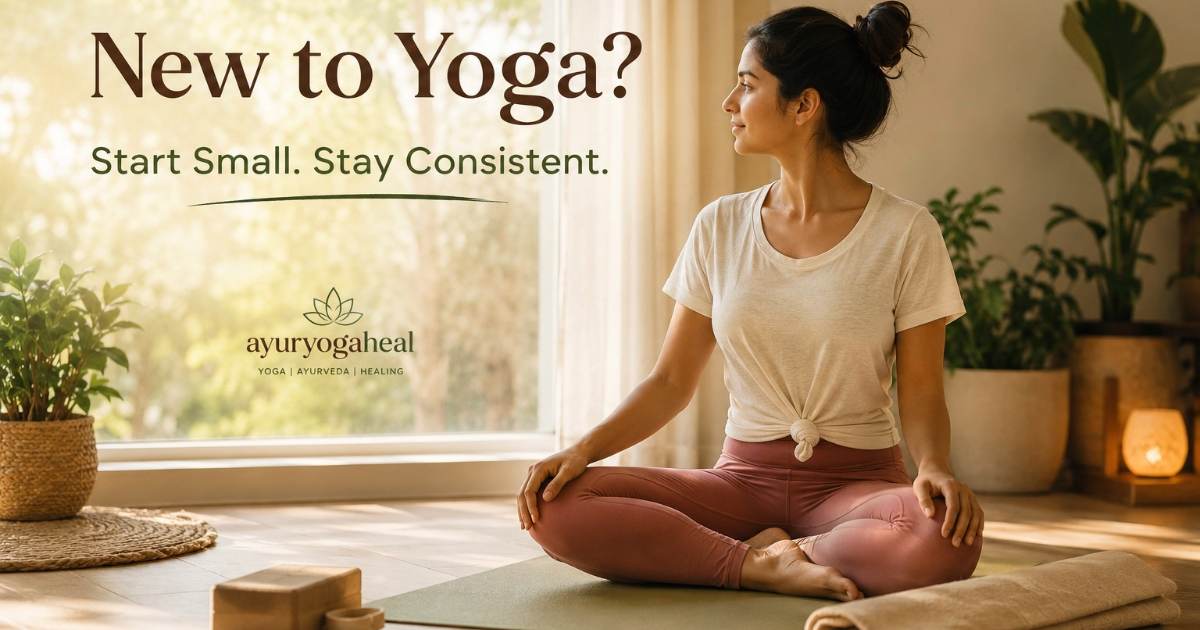
A mat, a small cushion, soft natural light, or even a folded blanket can help signal to the mind that this is a space to slow down.
Over time, your body begins to associate that space with calmness and restoration.
That feeling itself becomes something you look forward to.
Yoga Is Not About Becoming Someone Else
One reason many beginners quit yoga early is because they think they are “not doing it right.”
But yoga is not a performance.
It is a practice of noticing.
Noticing your:
- breath,
- posture,
- tension,
- energy,
- thoughts,
- pace.
Some days the practice feels calming.
Some days the mind stays busy.
Both are normal.
Progress in yoga is often quieter than people expect.
You may simply notice:
- sleeping better,
- reacting less quickly,
- feeling lighter after stretching,
- breathing more deeply,
- or becoming more aware of your body during stressful moments.
That is still progress.
A Simple 10-Minute Daily Yoga Routine for Beginners
If you’re unsure where to start, try this beginner-friendly flow:
Minute 1–2
Conscious breathing
Minute 3–4
Cat–Cow Stretch
Minute 5–6
Child’s Pose
Minute 7–8
Gentle seated forward fold
Minute 9–10
Quiet sitting or slow breathing
No pressure.
No perfection.
Just presence.
Final Thoughts
Starting yoga does not require flexibility, expensive equipment, or a dramatic lifestyle change.
It begins with small daily moments that help you reconnect with your breath, body, and mind.
The most sustainable yoga practice is usually the one that feels simple enough to continue — especially on ordinary days.
And sometimes, those ordinary daily practices quietly become the most transformative part of all.
Feeling overwhelmed by complicated yoga routines?
Download the 21 Day Yoga Self Practice Journal for a simple daily practice you can actually stick to.
FAQ: Beginner Yoga Practices
How do beginners start yoga at home?
Start with short daily practices like breathing exercises, gentle stretching, and beginner-friendly poses. Focus on consistency instead of complicated routines.
How many minutes of yoga should a beginner do daily?
Even 10 minutes of daily yoga can help improve flexibility, reduce stress, and build a sustainable habit.
Is yoga good for stress and anxiety?
Gentle yoga and breathing practices may help calm the nervous system, reduce mental overwhelm, and improve emotional balance.
Do I need to be flexible before starting yoga?
No. Flexibility develops gradually through practice. Yoga is designed for beginners and different body types.
What is the best time to practice yoga?
Morning yoga can increase energy and focus, while evening yoga may help relax the body and improve sleep. The best time is the one you can practice consistently.
If you are completely new to the practice, this beginner-friendly yoga guide explores the foundations of yoga more gently.